
Citizen Oversight on the South East Development Commission (SEDC)
- Context and Mandate
The South East Development Commission (SEDC) was established by the National Assembly and signed into law by President Bola Ahmed Tinubu as a statutory response to decades of systemic neglect, infrastructural decay, severe gully erosion, entrenched insecurity, and deliberate economic marginalisation of the South East geopolitical zone. Its legislative mandate spans five states — Abia, Anambra, Ebonyi, Enugu, and Imo — and covers the full spectrum of developmental priorities: education, agriculture, infrastructure, security, environment, tourism, sports, and human capital development.
The creation of the SEDC represents a historic opportunity. The South East, once a hub of commercial and industrial activity before and immediately after the civil war, has been systematically excluded from federal capital allocation at levels proportionate to its population and economic contribution. Decades of abandoned federal projects, crumbling road networks, catastrophic erosion sites — particularly in Anambra and Imo — and the erosion of institutional trust have left a region with enormous human capital potential operating well below capacity.
The Commission has since unveiled a “Vision 2050” blueprint targeting a $200 billion regional economy within 10 years, a target that would require sustained, disciplined investment and governance of the highest standard. Early signals appeared promising: the South East Venture Capital Program attracted over 1,200 startup applications, suggesting genuine entrepreneurial appetite exists in the region. However, ambition without accountability is merely aspiration. As this paper will demonstrate, the gap between the SEDC’s stated vision and its demonstrated performance demands urgent and structured citizen oversight.
- Recent Developments Raising Concern
The following concerns are not peripheral critiques — they strike at the foundational credibility of the institution.
2.1 Spending Transparency Failures
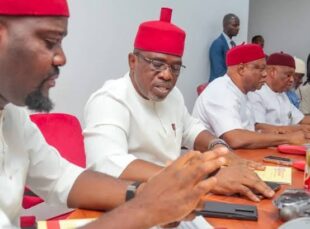
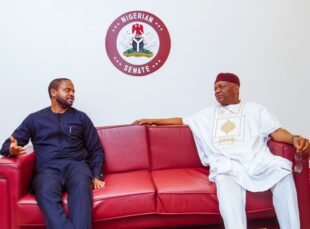
At a June 2026 Senate oversight hearing chaired by Senator Orji Uzor Kalu, SEDC management was unable to satisfactorily account for ₦16.6 billion released to the Commission in December 2025 — just six months prior. The breakdown of documented concerns is alarming:
- ₦153 million spent on an Abuja liaison office — a recurrent overhead item with no clear development rationale;
- ₦2.5 billion classified as “implied expenditure” — a category that has no basis in public financial management law and amounts to self-authorised spending;
- Over ₦4 billion in total expenditure with vague or absent supporting documentation.
The Senate issued a formal demand for a complete expenditure breakdown within one week. The fact that this demand was necessary — nine months into the Commission’s operation — is itself a governance failure. It suggests an institutional culture that has not internalised public accountability as a default, but treats it as an external imposition to be managed.
These are not administrative teething problems. In Nigerian public finance, the inability to produce documentation for released funds typically precedes the discovery of misappropriation.



2.2 Perception of Minimal Visible Impact on the Ground
Despite the Commission’s considerable rhetoric, civil society organisations, business leaders, traditional rulers, and ordinary residents across the five states consistently report no visible project activity nine months after the SEDC’s formal commencement of operations. There is no published pipeline of commissioned works, no public contractor registry, no community engagement framework, and no communication strategy that reaches ordinary South Easterners.
The Igbo Community Association FCT described the SEDC in pointed terms as “a glaring failure,” citing the total absence of any transparent pipeline of interventions. This is not a minority view — it reflects a broad-based loss of confidence that, if unchecked, will permanently undermine public trust in the institution before it has delivered a single visible project.
The contrast with the Commission’s mandate is stark. Gully erosion alone destroys thousands of acres of arable land annually across Anambra, Imo, and Abia. The cost of inaction compounds every rainy season. Farmers lose land. Communities lose homes. The ecological damage is irreversible without urgent intervention. That no erosion sites have been formally gazetted as SEDC priority projects is a damning indictment of the Commission’s operational readiness.