02 Jan

The Fading Voice: Confronting the Decline of the Igbo Language Among Youths

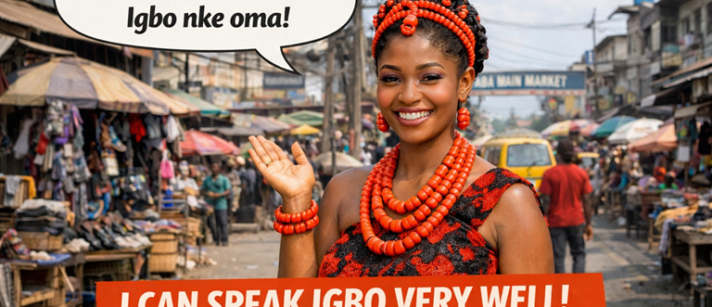
Language is more than a tool for communication; it is the living archive of a people’s history, worldview, and identity. For Ndi Igbo, the Igbo language carries centuries of wisdom, values, and communal memory—encoded in proverbs, folktales, songs, rituals, and everyday expressions of life. Yet today, this powerful cultural vessel faces a quiet but alarming erosion. Among many Igbo youths, fluency in the mother tongue is fading, replaced by dominant global and national languages that increasingly define education, media, and social interaction.

This decline is not merely a linguistic concern. It is a cultural, social, and developmental challenge with far-reaching implications for identity, heritage preservation, and intergenerational continuity. Addressing it requires honest reflection, collective responsibility, and deliberate action.

With your help many lives are Impact ed up on Positively

Explore More

Understanding the Roots of the Decline

The fading use of the Igbo language among youths did not happen overnight. It is the result of layered historical, social, and structural factors that continue to shape modern Igbo society.

One major influence is the legacy of colonial education, which elevated English as the primary language of instruction, governance, and perceived social mobility. Over time, fluency in English became associated with intelligence, success, and prestige, while indigenous languages were subtly relegated to informal or domestic spaces. This mindset persists today, especially in urban centers, where many parents consciously or unconsciously prioritize English over Igbo in raising their children.

Urbanization and migration have further accelerated the shift. As families relocate to cosmopolitan cities or live in multicultural environments, the use of Igbo at home often declines. Children grow up surrounded by peers who communicate in English or Nigerian Pidgin, reducing both exposure to and confidence in speaking their ancestral language.

Modern media and technology also play a significant role. Most digital platforms, entertainment content, and educational resources consumed by youths are produced in English. Without deliberate inclusion of Igbo language content in these spaces, young people are rarely encouraged to see their language as relevant, modern, or aspirational.


The Cultural Cost of Language Loss

When a language weakens, a people’s cultural depth weakens with it. The Igbo language is uniquely expressive, rich in metaphor, tonal nuance, and philosophical meaning. Many Igbo proverbs, for instance, lose their full depth and context when translated into English. Concepts of communal responsibility, respect for elders, spirituality, and moral instruction are often best conveyed in the mother tongue.

As youths lose fluency, they also lose direct access to oral traditions passed down through generations—folktales that teach resilience, songs that preserve history, and idioms that encode ethical values. This creates a cultural gap between generations, where elders struggle to transmit knowledge, and youths struggle to fully understand their roots.

Language loss also affects identity formation. For many young people, the inability to speak Igbo fluently can lead to feelings of disconnection or cultural insecurity. Identity becomes fragmented—rooted in heritage by name, but detached in practice. Over time, this detachment risks weakening communal bonds that have historically defined Igbo society.


page-header-bg.webp

We are Dedicated to
Promoting Our Heritage

Language as a Human Rights and Development Issue

From a human rights perspective, language preservation is deeply connected to cultural rights and dignity. Every community has the right to preserve, develop, and transmit its language to future generations. When indigenous languages are marginalized, the cultural rights of the people who speak them are equally threatened.

For Ndi Igbo, preserving the language is also a development issue. Indigenous languages play a critical role in inclusive education, community mobilization, and grassroots participation. Children learn best when foundational concepts are introduced in a familiar language. Communities engage more meaningfully when advocacy, civic education, and social initiatives are communicated in the language of the people.

A society that sidelines its indigenous language risks excluding large segments of its population from full participation in cultural and civic life. Revitalizing the Igbo language is therefore not a nostalgic exercise—it is a strategic investment in inclusive development and social cohesion.


The Role of Families and Communities

The survival of the Igbo language begins at home. Families remain the most powerful custodians of language transmission. When parents consistently speak Igbo with their children—regardless of social setting—they normalize its use and affirm its value. Children who grow up bilingual or multilingual are not disadvantaged; rather, they gain cognitive, cultural, and social advantages.

Communities also have a vital role to play. Cultural associations, town unions, faith-based organizations, and youth groups can create safe and encouraging spaces for Igbo language use. Events, storytelling sessions, debates, and cultural festivals conducted in Igbo help reposition the language as vibrant and relevant.

Importantly, youths themselves must be engaged not as passive recipients but as active participants. Language preservation efforts that fail to include youth voices risk appearing outdated or imposed. Young people should be empowered to shape how Igbo is spoken, written, and expressed in contemporary contexts.

Education and Policy: Reclaiming Institutional Support

Educational institutions are central to reversing the decline. While Igbo is recognized as a subject in many curricula, its implementation is often weak, underfunded, or treated as optional. Strengthening mother-tongue education—especially at early learning levels—can significantly improve language retention and literacy.

Teacher training, updated learning materials, and culturally relevant curricula are essential. Beyond formal education, policy support for indigenous languages in broadcasting, public communication, and digital platforms can help normalize their everyday use.

When governments and institutions visibly value indigenous languages, society follows. Language preservation must move from symbolic recognition to practical implementation.

Technology, Media, and the Future of Igbo

The digital age, while contributing to language decline, also offers powerful tools for revival. Social media, podcasts, blogs, music, films, and mobile apps provide unprecedented opportunities to bring the Igbo language into spaces where youths already spend their time.

Content creators who produce engaging Igbo-language content—whether educational, comedic, musical, or social—are reshaping perceptions of the language as modern and expressive. Supporting such initiatives through funding, partnerships, and visibility is critical.

Technology can also support documentation, learning, and cross-generational exchange, ensuring that dialects, expressions, and oral histories are preserved for future generations.


A Collective Responsibility

The fading of the Igbo language among youths is not inevitable. It is a challenge shaped by choices—individual, communal, and institutional. And it can be reversed through equally deliberate choices.

Preserving the Igbo language requires a collective commitment to value our heritage, speak our truth in our own voice, and pass on what was entrusted to us. It calls on parents to speak, educators to teach, leaders to support, creators to innovate, and youths to embrace their linguistic identity with pride.

At its core, the Igbo language is a bridge between past and future. To let it fade is to weaken that bridge. To revive it is to affirm that Ndi Igbo, wherever they are in the world, remain rooted in a shared identity, a shared history, and a shared voice.

The question before us is not whether the Igbo language can survive—but whether we are willing to act to ensure that it does.

Post In:

Our Heritage